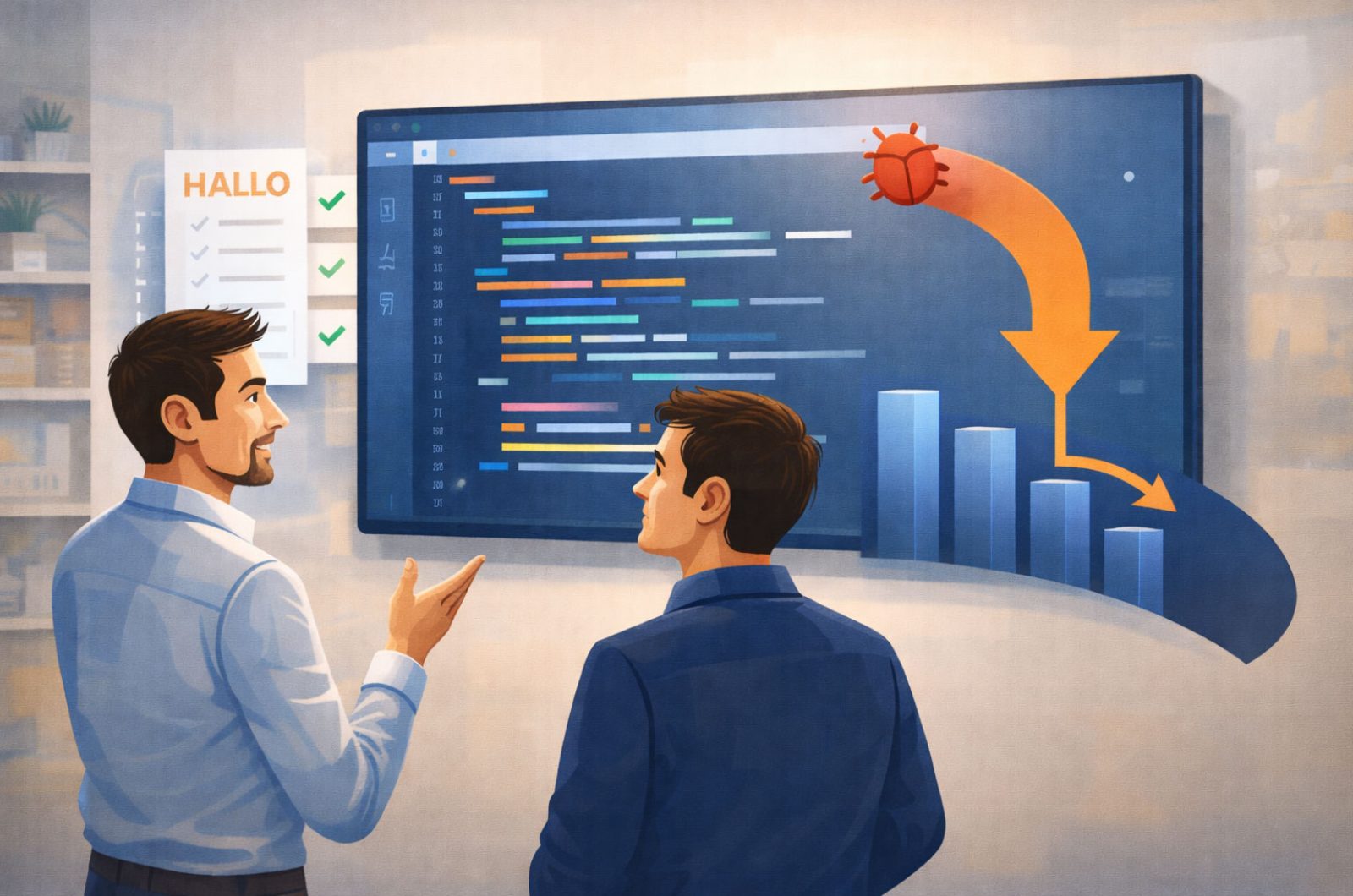
The results we achieved at Hallo show exactly why this approach works. By consistently applying clean as you code, we reduced the defect rate by 75%.
The Starting Point
Hallo, a leading telecom retailer, partnered with Infodation to develop a comprehensive integration platform connecting Salesforce, Entra ID, and the web channel.
The existing setup had grown fragmented over time. Integrations were slow, error-prone, and difficult to adapt. As a result, flexibility and scalability were limited, making it increasingly hard to deliver new features quickly or support Hallo’s growth ambitions.
Taking Back Control
Together with Hallo’s technical lead, we quickly identified the core challenges. Then we launched a new integration platform and deliberately took ownership of the “software wheel”: not just delivering functionality, but setting a higher standard for how the software was built and maintained.
In practice, this meant:
- Treating code quality as part of daily work, not a final check
- Refactoring immediately when something felt off (even if it still worked!)
- Keeping changes small, clear, and easy to reason about
- Making readability and structure a shared responsibility
- Preventing technical debt instead of managing it later
Rather than relying on extra testing or downstream fixes, we focused on building quality into the code from the start.
The Result: 75% Fewer Defects
The impact was clear and measurable.
By consistently applying clean as you code principles:
- the defect rate dropped by 75%
- the codebase became more stable and predictable
- changes could be delivered faster, with less risk
- trust increased, within the team and with Hallo
Fewer defects don’t just mean fewer bugs. They mean less firefighting, fewer interruptions, and more time spent on real improvements.
What This Means
Clean as you code is not about perfection. It’s about discipline and intent. It’s about making quality a habit, not a phase.
For Hallo, this approach created a stable foundation for future growth. For the team, it meant less reactive work and more focus on building forward.
Food for Thought
Sometimes, the biggest improvement comes from a simple shift in mindset: don’t clean up later.


