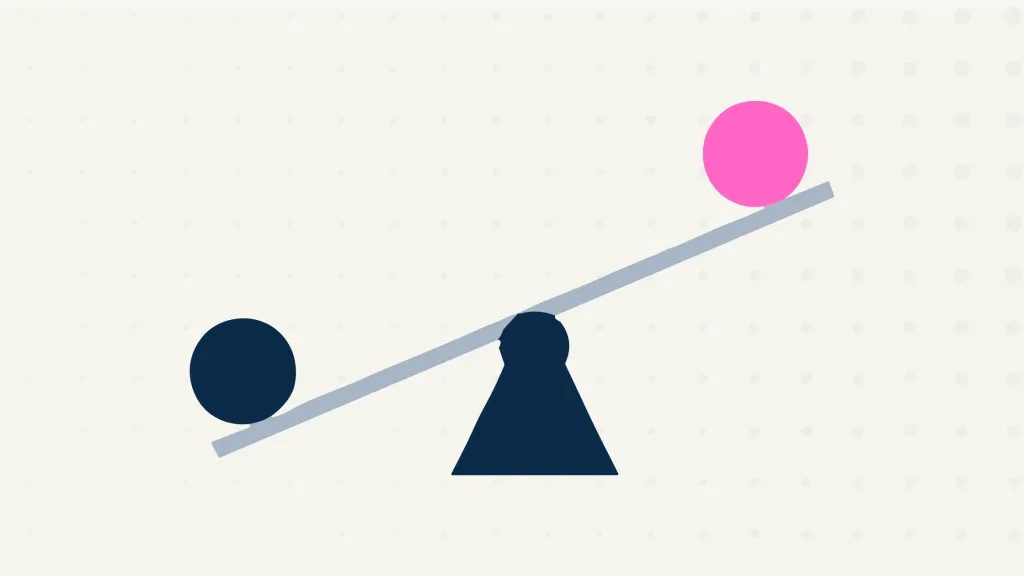
Recently, I came across a LinkedIn post from someone who shared a de Volkskrant article. The headline was loud and clear: "AI is becoming too expensive." The post went on to argue that AI tokens are becoming a major cost burden. Another post I came across talked about a "subsidized honeymoon phase" and what AI tokens really cost.
We're seeing these developments in the market as well. That's exactly why we're constantly looking for the right balance. Honestly? I think Infodation has found that balance remarkably well by now.
Draw up balance: costs versus manpower
Let's first zoom in on that post about the real cost of AI. Someone had actually done the math for Claude. The conclusion? A single month of intensive programming already costs a fortune, but the model is currently so heavily subsidized that the actual, astronomical costs remain largely invisible to most users.
For now, at least. Because what happens when Claude starts charging cost-covering prices once you've become completely dependent on it? That's a very real vendor lock-in scenario.
Still, there's a big "but" in this story. Yes, tokens are expensive, and in many cost analyses the numbers sound alarming. But are those figures also compared to the cost of an entire team? I'm absolutely convinced that token costs should always be weighed against the traditional cost of manpower. If one person, equipped with the right AI tools, can do the work that previously required an entire team, then the price of AI tokens still doesn't come close to the salaries and overhead of that team. In the end, you're often still many times more cost-effective.
But, and this is the key point, there has to be the right balance. On one side, the smart use of AI and, in our case, the New Way Of Working (NWOW). And on the other side, independence from LLMs, platforms, token consumption, and bringing humans in the loop at the right moment.
One side of the scale: The use of AI (and the NWOW)
Why does AI sit on one side of the balance? Because it's the ultimate accelerator. It enables individuals to become hyper-productive, automate routine work, and deliver results in a fraction of the time. Without AI, you miss the boat, lose momentum, and remain stuck in the past. AI gives you the leverage that's needed to compete in today's world.
The other side of the scale: Independence and Humans in the Loop
Why is independence so crucial on the other side? Precisely because it prevents you from paying the full price once the honeymoon phase is over. If you build blindly on a single platform (such as OpenAI or Anthropic), you become vulnerable to their pricing decisions.
Independence means staying flexible in your choice of platforms and your token usage. In addition, having a human in the loop at the right moment is essential. A human should remain in control, not only to safeguard quality, but also to prevent AI systems from burning through expensive tokens for hours on end. The human expert steps in before the meter keeps running unnecessarily.
Why we've found the right balance
The secret is that you don't see these two sides as opposites, but as elements that reinforce each other. And that's exactly why we've found the right balance.
We don't chase every AI hype and we don't blindly accumulate (process) debt with a single tech giant. We apply AI very deliberately where it creates the greatest impact (the NWOW), while designing our systems and processes in a way that keeps us independent.
AI only becomes too expensive when you lose control.

